History of Ile-Ife
Three ages of the holy city · From creation to the present day
Where Creation Began
Ile-Ife is among the oldest continuously inhabited cities in sub-Saharan Africa, and in Yoruba tradition it is the place where creation itself began — where Oduduwa descended from the heavens and cast the first earth upon the primordial waters.
The History
In Yoruba oral tradition, the first age of Ile-Ife was called Ife Oodaye, meaning "land of most ancient days." This era was inhabited by powerful spiritual beings and giants. Their civilisation was brought to an end by a catastrophic flood, after which the land lay submerged.
When the floodwaters receded, the survivors of Ife Oodaye gathered and rebuilt. This second age — Ife Ooyelagbo, "city of survivors" — was a transitional period. These communities kept the sacred memory of the first age alive through oral tradition, ritual, and the preservation of sacred groves.
The third and present age began when Oduduwa arrived with his followers from the east. He descended from the heavens on a chain, carrying a calabash of sand and a five-toed hen. Where he cast the sand, the first dry land appeared. The hen spread it into continents, and Ile-Ife became the centre of creation.
A City of Bronze and Stone
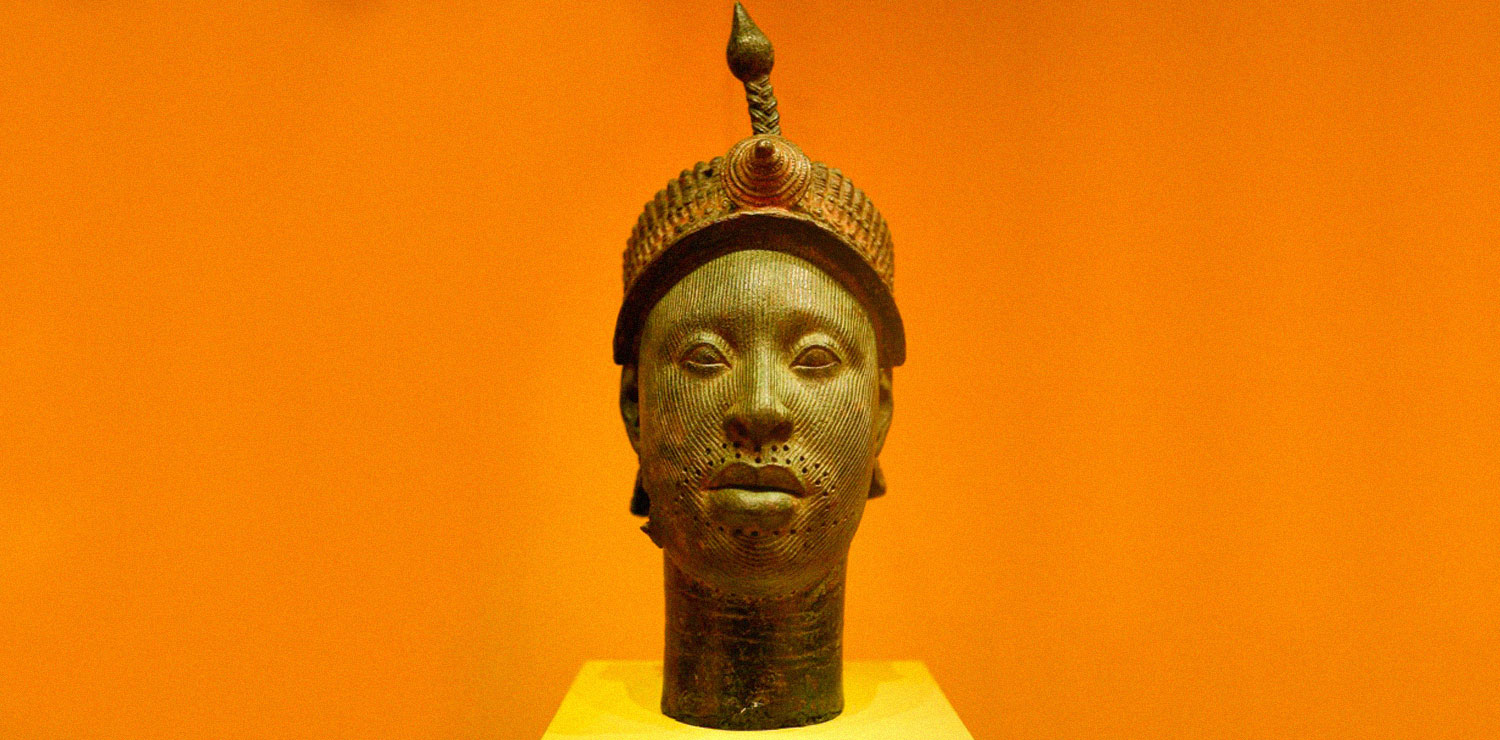
Between 1200 and 1400 CE, Ile-Ife produced some of the most naturalistic sculptures in African art history — bronze heads, terracotta figures, and stone carvings of extraordinary refinement. King Obalufon II is credited with inventing bronze casting; his life-sized copper mask remains one of the most treasured artefacts of the ancient world. A bronze king dated around 1300 CE is held in the British Museum.