Origin of Ile-Ife
Where creation began · The first land · Birthplace of the Yoruba people
The History of Ile-Ife
In Yoruba cosmology, Ile-Ife is literally the first place on earth. Olodumare (God) sent Oduduwa down from the heavens on a chain, bearing a calabash of sand and a five-toed hen. He poured the sand on the primordial waters; the hen scratched and spread it, forming the first land. That land became Ile-Ife — "the land of expansion." The sacred grove of Oduduwa at the palace marks the exact spot of creation.
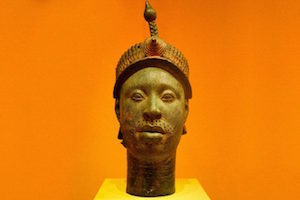
Following the creation era, Ile-Ife developed into the most powerful city-state in the Yoruba world. Oduduwa's children and grandchildren were sent out to found new kingdoms — Oyo, Benin, Ketu, Popo, Owu, Sabe, and many others. Each kingdom maintained spiritual tribute to Ile-Ife as the ancestral source. This period saw the great flowering of Yoruba civilisation, including the bronze and terracotta artistic tradition that would astonish the world centuries later.
Modern Ile-Ife is a city of approximately 500,000 people, home to Obafemi Awolowo University (established 1962) — one of Nigeria's premier universities and a centre of Yoruba studies and archaeology. The Ife Museum (1954) houses one of the finest collections of pre-colonial African art anywhere in the world. The Ile Oodua Palace remains an active royal court, and the traditions of Oduduwa are maintained through continuous ceremony and cultural practice.
Obafemi Awolowo University
Founded in 1962, Obafemi Awolowo University (formerly University of Ife) is built on the site of the ancient Ife kingdom and is one of Nigeria's most distinguished institutions of higher learning. Its Ife campus has been central to the archaeological excavation and scholarly study of Ile-Ife's ancient heritage, including the bronze heads and terracotta figures.